


Third-party content reporting violations of international law in Indian-Administered Jammu and Kashmir.
This report finds that India has been operating secret state-sponsored paramilitary groups composed of captured or surrendered former militants described as “renegades” by the Indian government. Many of these groups have been responsible for grave human rights abuses, including summary executions, torture, and illegal detention as well as election-related intimidation of voters.
Topics: recommendations, background, applicable international law, violations by Indian government forces, state-sponsored renegade militias, attacks on human rights activists, attacks on the press, attacks on medical workers, abuses by uniformed Indian security personnel, torture, violations by militant organizations, killings on Hindu minorities, extrajudicial executions and reprisal killings
Terms: March 1996 killing of Jalil Andrabi, December 1995 shooting of Zafar Mehraj, December 1995 killing of Farooq Ahmed Sheikh, Ikhwan-ul-Muslimoon, January 1996 killings of Mohammed B and Sheikh Y, December 1995 killing of Ghulam Ahmed Bhat and Khurshid Ahmed Bhat, custodial torture, custodial rape, Rashtriya Rifles, enforced disapppearances, arbitrary detention, excessive use of force, custodial killings, cordon and search operations, Border Security Force (BSF), Central Reserve Police Force (CRPF)
Originally published
May 1996
This report finds that India has been operating secret state-sponsored paramilitary groups composed of captured or surrendered former militants described as “renegades” by the Indian government. Many of these groups have been responsible for grave human rights abuses, including summary executions, torture, and illegal detention as well as election-related intimidation of voters.
Topics: recommendations, background, applicable international law, violations by Indian government forces, state-sponsored renegade militias, attacks on human rights activists, attacks on the press, attacks on medical workers, abuses by uniformed Indian security personnel, torture, violations by militant organizations, killings on Hindu minorities, extrajudicial executions and reprisal killings
Terms: March 1996 killing of Jalil Andrabi, December 1995 shooting of Zafar Mehraj, December 1995 killing of Farooq Ahmed Sheikh, Ikhwan-ul-Muslimoon, January 1996 killings of Mohammed B and Sheikh Y, December 1995 killing of Ghulam Ahmed Bhat and Khurshid Ahmed Bhat, custodial torture, custodial rape, Rashtriya Rifles, enforced disapppearances, arbitrary detention, excessive use of force, custodial killings, cordon and search operations, Border Security Force (BSF), Central Reserve Police Force (CRPF)
Originally published
May 1996
This is the fourth report on serious violations of humanitarian law and human rights in Indian-Administered Jammu and Kashmir published by The Humanitarian Law Project/International Educational Development (HLP/IED) and the Association of Humanitarian Lawyers. HLP/IED undertook 7 fact-finding missions to Kashmir between 1991 and 1995.
Topics: United Nations action on Kashmir, the Kashmiri right to self-determination, the Kashmiri war and humanitarian law, the war--everyday reality, some recent events, India’s humanitarian law violations, violations of rights of detainees in Kashmir, the economic destruction of Kashmir, final assessment, what should the United Nations do
Terms: United Nations involvement, colonial or alien domination, right to self-determination, Quit Kashmir, Nimitz, McNaughton, human rights violations, humanitarian law violations, TADA, Public Safety Act (PSA), National Security Act (NSA), Armed Forces Special Powers Act (AFSPA), Tsar-i-Sharif (Charar-i-Sharief) arson, destruction of property, human shields, abduction and killing of Jalil Andrabi, killing of Mushtaq Ali, murder and torture of captured combatants, murder and torture of POWs, interrogation centers, International Federation of Human Rights investigations, International Rehabilitation Council for Torture Victims (Copenhagen) investigations, rape, Indian refusal to allow monitoring attacks on civilians, attacks on hospitals, attacks on medical personnel, interference with communications, interference with humanitarian assistance, destruction of villages, destruction of artifacts, torture of POWs, torture of civilians, violations against civilians, violations against detainees
Originally published
March 1996
This is the fourth report on serious violations of humanitarian law and human rights in Indian-Administered Jammu and Kashmir published by The Humanitarian Law Project/International Educational Development (HLP/IED) and the Association of Humanitarian Lawyers. HLP/IED undertook 7 fact-finding missions to Kashmir between 1991 and 1995.
Topics: United Nations action on Kashmir, the Kashmiri right to self-determination, the Kashmiri war and humanitarian law, the war--everyday reality, some recent events, India’s humanitarian law violations, violations of rights of detainees in Kashmir, the economic destruction of Kashmir, final assessment, what should the United Nations do
Terms: United Nations involvement, colonial or alien domination, right to self-determination, Quit Kashmir, Nimitz, McNaughton, human rights violations, humanitarian law violations, TADA, Public Safety Act (PSA), National Security Act (NSA), Armed Forces Special Powers Act (AFSPA), Tsar-i-Sharif (Charar-i-Sharief) arson, destruction of property, human shields, abduction and killing of Jalil Andrabi, killing of Mushtaq Ali, murder and torture of captured combatants, murder and torture of POWs, interrogation centers, International Federation of Human Rights investigations, International Rehabilitation Council for Torture Victims (Copenhagen) investigations, rape, Indian refusal to allow monitoring attacks on civilians, attacks on hospitals, attacks on medical personnel, interference with communications, interference with humanitarian assistance, destruction of villages, destruction of artifacts, torture of POWs, torture of civilians, violations against civilians, violations against detainees
Originally published
March 1996
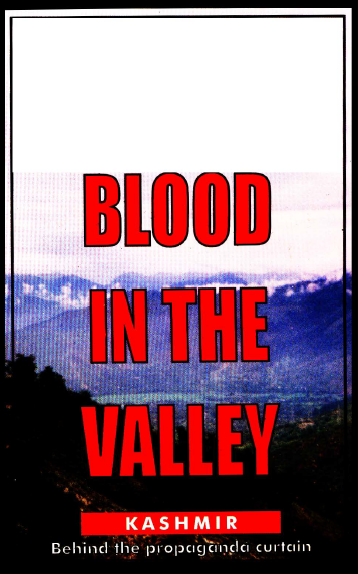
This publication consists of interviews with people from a variety of backgrounds, providing a brief picture of the political-historical background, democratic rights, human rights violations, and army and administration reactions to such situations in Jammu and Kashmir.
Topics: History, nationalist movement, accession and plebiscite, politics, militancy, army rule.
Originally published
December 1995
This publication consists of interviews with people from a variety of backgrounds, providing a brief picture of the political-historical background, democratic rights, human rights violations, and army and administration reactions to such situations in Jammu and Kashmir.
Topics: History, nationalist movement, accession and plebiscite, politics, militancy, army rule.
Originally published
December 1995

The report of a 1995 mission by the International Commission of Jurists as a result of concerns over human rights abuses committed during "disturbances" in Jammu and Kashmir, and centred in the Valley of Kashmir, beginning in 1988.
Topics: the land and the people, historical background , the uprising in Kashmir - origins and attitudes, human rights and the rule of law: India, misconduct by government forces and personnel, misconduct by militant groups, protection and assistance of civilians in Jammu an dKashmir, Azad Kashmir and the Northern Areas, an analysis of the concept of self-determination, response of the Government of India, response of the Government of Pakistan
Terms: alienation, attitudes, political aims, human rights law, humanitarian law, judicial system, freedom of speech/expression, freedom of assembly, extra-judicial executions, custodial killings, killings of non-combatants, torture, disappearances, rape, assaults, destruction of property and theft, personal and family life, kidnapping, hostage-taking, constraints on media, extortion, bribery, access to information, refugees and displaced persons in India, Public Safety Act (PSA), Terrorist and Disruptive Activities (Prevention) Act (TADA), Armed Forces Special Powers Act (AFSPA), detention, curfew, habeas corpus, Dr. Farooq Ashai, Dr. Abdul Ahad Guru, H. N. Wanchoo
Originally published
December 1995
The report of a 1995 mission by the International Commission of Jurists as a result of concerns over human rights abuses committed during "disturbances" in Jammu and Kashmir, and centred in the Valley of Kashmir, beginning in 1988.
Topics: the land and the people, historical background , the uprising in Kashmir - origins and attitudes, human rights and the rule of law: India, misconduct by government forces and personnel, misconduct by militant groups, protection and assistance of civilians in Jammu an dKashmir, Azad Kashmir and the Northern Areas, an analysis of the concept of self-determination, response of the Government of India, response of the Government of Pakistan
Terms: alienation, attitudes, political aims, human rights law, humanitarian law, judicial system, freedom of speech/expression, freedom of assembly, extra-judicial executions, custodial killings, killings of non-combatants, torture, disappearances, rape, assaults, destruction of property and theft, personal and family life, kidnapping, hostage-taking, constraints on media, extortion, bribery, access to information, refugees and displaced persons in India, Public Safety Act (PSA), Terrorist and Disruptive Activities (Prevention) Act (TADA), Armed Forces Special Powers Act (AFSPA), detention, curfew, habeas corpus, Dr. Farooq Ashai, Dr. Abdul Ahad Guru, H. N. Wanchoo
Originally published
December 1995

This report by the The South Asian Human Rights Documentation Centre (a network of individuals that seeks to investigate, document, and disseminate information about human rights) focuses on the Armed Forces Special Powers Act (AFSPA), including its application in the "North East" of India as well as Indian-Administered Kashmir. Under AFSPA, all Indian forces have unrestricted and unaccounted power to once an area is declared disturbed. AFSPA gives armed forces wide powers to shoot, arrest and search, all in the name of "aiding civil power." The enforcement of the AFSPA has resulted in innumerable incidents of arbitrary detention, torture, rape, and looting by security personnel. This legislation is sought to be justified by the Government of India as required to stop secession.
Topics: historical background, the act and its provisions, legal analysis, Indian law, the Army Act, state of emergency, international law, international customary law, comparative law standards
Terms: The Armed Forces (Special Powers) Act (AFSPA), Indian Criminal Procedure Code (CrPC), constitutional rights, international human rights law, human rights violations, Indian state propaganda, legalized impunity, failure of international accountability
Originally published
November 1995
This report by the The South Asian Human Rights Documentation Centre (a network of individuals that seeks to investigate, document, and disseminate information about human rights) focuses on the Armed Forces Special Powers Act (AFSPA), including its application in the "North East" of India as well as Indian-Administered Kashmir. Under AFSPA, all Indian forces have unrestricted and unaccounted power to once an area is declared disturbed. AFSPA gives armed forces wide powers to shoot, arrest and search, all in the name of "aiding civil power." The enforcement of the AFSPA has resulted in innumerable incidents of arbitrary detention, torture, rape, and looting by security personnel. This legislation is sought to be justified by the Government of India as required to stop secession.
Topics: historical background, the act and its provisions, legal analysis, Indian law, the Army Act, state of emergency, international law, international customary law, comparative law standards
Terms: The Armed Forces (Special Powers) Act (AFSPA), Indian Criminal Procedure Code (CrPC), constitutional rights, international human rights law, human rights violations, Indian state propaganda, legalized impunity, failure of international accountability
Originally published
November 1995