


Third-party content reporting violations of international law in Indian-Administered Jammu and Kashmir.
This report focuses on the human rights situation in the Indian state of Jammu and Kashmir in 1993 and 1994. The Immigration and Refugee Board of Canada is responsible for making decisions on immigration and refugee matters, including who needs refugee protection, among thousands of claimants who come to Canada annually.
Topics: geographical and historical overview, international relations, media access, main militant groups, Indian forces, human rights abuses by Indian forces, national security legislation, government measures to improve human rights protection, the judicial system, human rights abuses by militants, displaced populations, future prospects
Terms: international human rights monitors lack of access, propaganda, Newspapers Incitements to Offenses Act (1971), killing of journalist Ghulam Mohammed Lone, government media pressure, factionalism, Indian army, Border Security Force (BSF), Central Reserve Police Force (CRPF), April 1993 killing off-duty Kashmiri police officer, cordon and search operations, curfews, troop presence, November 1993 Sopore Massacre, January 1993 Sopore Massacre, April 1992 Sopore Massacre, April 1993, April 1993 Lal Chowk Arson and Massacre, October 1993 Bijbehara Massacre, March 1994 Mahand Massacre, September 1994 Bandipora Massacre, extrajudicial killings, enforced disappearances, arbitrary arrest, routine disregard of laws, violation of habeas corpus, custodial killing, torture, rape, Terrorist and Disruptive Activities (Prevention) Act (TADA), the Armed Forces (Special) Powers Act (AFSPA), the Jammu and Kashmir Public Safety Act (PSA), 1991 Amendment of Code of Criminal Procedure, impunity, failure to register complaints, denial of responsibility, falsification of records, intimidation of witnesses and complainants, partial inquiries
Originally published
March 1995
This report focuses on the human rights situation in the Indian state of Jammu and Kashmir in 1993 and 1994. The Immigration and Refugee Board of Canada is responsible for making decisions on immigration and refugee matters, including who needs refugee protection, among thousands of claimants who come to Canada annually.
Topics: geographical and historical overview, international relations, media access, main militant groups, Indian forces, human rights abuses by Indian forces, national security legislation, government measures to improve human rights protection, the judicial system, human rights abuses by militants, displaced populations, future prospects
Terms: international human rights monitors lack of access, propaganda, Newspapers Incitements to Offenses Act (1971), killing of journalist Ghulam Mohammed Lone, government media pressure, factionalism, Indian army, Border Security Force (BSF), Central Reserve Police Force (CRPF), April 1993 killing off-duty Kashmiri police officer, cordon and search operations, curfews, troop presence, November 1993 Sopore Massacre, January 1993 Sopore Massacre, April 1992 Sopore Massacre, April 1993, April 1993 Lal Chowk Arson and Massacre, October 1993 Bijbehara Massacre, March 1994 Mahand Massacre, September 1994 Bandipora Massacre, extrajudicial killings, enforced disappearances, arbitrary arrest, routine disregard of laws, violation of habeas corpus, custodial killing, torture, rape, Terrorist and Disruptive Activities (Prevention) Act (TADA), the Armed Forces (Special) Powers Act (AFSPA), the Jammu and Kashmir Public Safety Act (PSA), 1991 Amendment of Code of Criminal Procedure, impunity, failure to register complaints, denial of responsibility, falsification of records, intimidation of witnesses and complainants, partial inquiries
Originally published
March 1995
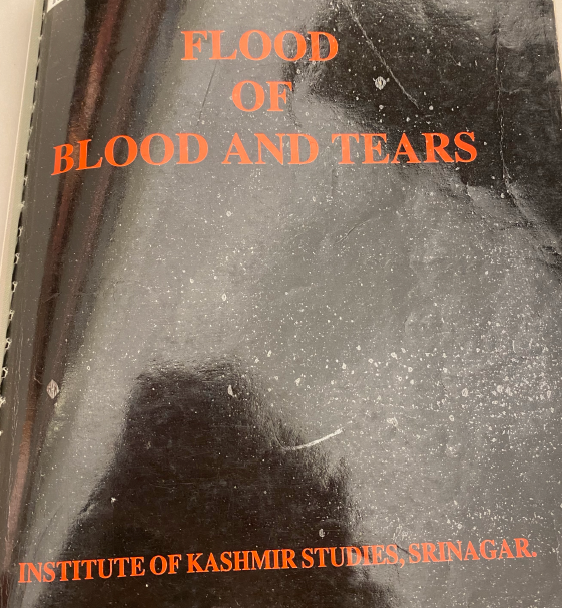
A report on human rights violations commited by the Indian forces during October 1994 (including 35 custodial deaths, 167 militants killed and 174 arrested, 69 civilians killed, 77 injured civilians, 196 civilians arrested - besides 4 women and 3 children).
Topics: Critical summary, daily events during October 1994 (custodial deaths, daily siege and search operations, selective raids, rape, molestation, gang rapes, disappearances after arrest, indiscriminate firing, beatings, torture, torching of private property, looting, extra-judicial execution campaigns, and crackdowns).
Originally published
February 1995
A report on human rights violations commited by the Indian forces during October 1994 (including 35 custodial deaths, 167 militants killed and 174 arrested, 69 civilians killed, 77 injured civilians, 196 civilians arrested - besides 4 women and 3 children).
Topics: Critical summary, daily events during October 1994 (custodial deaths, daily siege and search operations, selective raids, rape, molestation, gang rapes, disappearances after arrest, indiscriminate firing, beatings, torture, torching of private property, looting, extra-judicial execution campaigns, and crackdowns).
Originally published
February 1995

This report by Amnesty International details grave human rights violations in indian-administered Kashmir during 1994, including lack of legal redress, state impunity, extrajudicial killings, staged encounters, custodial rape, custodial torture, arbitrary detention and mistreatment of minors.
Topics: arbitrary arrest and detention, torture, deaths in custody, extrajudicial executions, disappearances, impunity, government attitude towards human rights in the state, reaction to the UN, denial of access
Terms: Border Security Forces (BSF), the Central Reserve Police Force (CRPF), Armed Forces (Special Powers) Act (AFSPA), violation of international human rights law, Jammu and Kashmir Public Safety Act (PSA), Terrorist and Disruptive Activities (Prevention) Act (TADA), custodial rape, custodial torture, violation of habeas corpus, custodial killings, extrajudicial killings, excessive use of force, enforced disappearances, fake encounters, judicial failure, legal impunity, excessive use of force, lack of international access, failure of accountability
Originally published
January 1995
This report by Amnesty International details grave human rights violations in indian-administered Kashmir during 1994, including lack of legal redress, state impunity, extrajudicial killings, staged encounters, custodial rape, custodial torture, arbitrary detention and mistreatment of minors.
Topics: arbitrary arrest and detention, torture, deaths in custody, extrajudicial executions, disappearances, impunity, government attitude towards human rights in the state, reaction to the UN, denial of access
Terms: Border Security Forces (BSF), the Central Reserve Police Force (CRPF), Armed Forces (Special Powers) Act (AFSPA), violation of international human rights law, Jammu and Kashmir Public Safety Act (PSA), Terrorist and Disruptive Activities (Prevention) Act (TADA), custodial rape, custodial torture, violation of habeas corpus, custodial killings, extrajudicial killings, excessive use of force, enforced disappearances, fake encounters, judicial failure, legal impunity, excessive use of force, lack of international access, failure of accountability
Originally published
January 1995

Grave human rights violations have risen dramatically since mid-1992 and have reached alarming proportions: two appendices to this report list details of 706 people who are reported to have been killed in the custody of the security forces in the state since January 1990, nearly all after torture. Most of the people who are tortured and killed in custody are young men picked up by the army or paramilitary forces during "crackdown" operations in villages or other areas to identify suspected militants. The relatives of those arrested are often not told why they are taken away or where they are being taken. People have been tortured to death either in crude attempts to extract information, to intimidate the local population, or as an act of reprisal for the killing by armed militants of security forces personnel.This report lists 706 cases recorded in four years. These findings underline Amnesty International's experience elsewhere: in situations of armed insurgency, such as in Jammu and Kashmir, the protection of human rights is most acutely and gravely at risk.
Topics: torture, deaths in custody, legal framework and the collapse of the rule of law, human rights abuses by armed opposition groups, amnesty international’s recommendations
Terms: custodial torture, custodial killings, arbitrary detention, "crackdowns," cordon and search operations, collective punishment, denial of access to justice, failure to investigate violations, denial of due process, mutilation, rape, intimidation, reprisals, attempted cover-ups, impunity, methods of torture, sexual abuse, encounter killings, denial of access to healthcare, refusal to investigate or prosecute, Border Security Force (BSF), Criminal Investigation Department (CID), Counter-Intelligence, Kashmir (CIK), Central Reserve Police Force (CRPF), Public Safety Act (PSA), Terrorist and Disruptive Activities Act (TADA)
Originally published
January 1995
Grave human rights violations have risen dramatically since mid-1992 and have reached alarming proportions: two appendices to this report list details of 706 people who are reported to have been killed in the custody of the security forces in the state since January 1990, nearly all after torture. Most of the people who are tortured and killed in custody are young men picked up by the army or paramilitary forces during "crackdown" operations in villages or other areas to identify suspected militants. The relatives of those arrested are often not told why they are taken away or where they are being taken. People have been tortured to death either in crude attempts to extract information, to intimidate the local population, or as an act of reprisal for the killing by armed militants of security forces personnel.This report lists 706 cases recorded in four years. These findings underline Amnesty International's experience elsewhere: in situations of armed insurgency, such as in Jammu and Kashmir, the protection of human rights is most acutely and gravely at risk.
Topics: torture, deaths in custody, legal framework and the collapse of the rule of law, human rights abuses by armed opposition groups, amnesty international’s recommendations
Terms: custodial torture, custodial killings, arbitrary detention, "crackdowns," cordon and search operations, collective punishment, denial of access to justice, failure to investigate violations, denial of due process, mutilation, rape, intimidation, reprisals, attempted cover-ups, impunity, methods of torture, sexual abuse, encounter killings, denial of access to healthcare, refusal to investigate or prosecute, Border Security Force (BSF), Criminal Investigation Department (CID), Counter-Intelligence, Kashmir (CIK), Central Reserve Police Force (CRPF), Public Safety Act (PSA), Terrorist and Disruptive Activities Act (TADA)
Originally published
January 1995

This is a report of the UN special rapporteur on torture (Nigel S Rodley) that was submitted to the UN Commission on Human Rights.
Topics: torture, purposes of torture, methods of torture, systemic torture, impunity
Terms: torture by police, torture by Indian forces, systematic torture, custodial torture, torture to extract information, torture to punish, execution by torture, custordial rape, systematic rape, lack of prosecutorial authority, lack of prosecutions, crackdown on dissent, 1993 custodial torture of Noodin Chaudry, 1993 custodial torture of Mohamed Hanif, 1993 custodial rape and killing of Sara Ganai, 1994 detention and custodial torture of journalist Mohammad Shafi, Papa II, Border Security Force (BSF) torture center, 1994 detention of and assault on journalist Mukhtar Ahmed
Originally published
January 1995
This is a report of the UN special rapporteur on torture (Nigel S Rodley) that was submitted to the UN Commission on Human Rights.
Topics: torture, purposes of torture, methods of torture, systemic torture, impunity
Terms: torture by police, torture by Indian forces, systematic torture, custodial torture, torture to extract information, torture to punish, execution by torture, custordial rape, systematic rape, lack of prosecutorial authority, lack of prosecutions, crackdown on dissent, 1993 custodial torture of Noodin Chaudry, 1993 custodial torture of Mohamed Hanif, 1993 custodial rape and killing of Sara Ganai, 1994 detention and custodial torture of journalist Mohammad Shafi, Papa II, Border Security Force (BSF) torture center, 1994 detention of and assault on journalist Mukhtar Ahmed
Originally published
January 1995